Filter by

The Economics of Public Issues
- Edition
- 17
- ISBN/ISSN
- 978-0-13-282768-3
- Collation
- viii, 264 p. ; 20 cm.
- Series Title
- -
- Call Number
- 330.973 Mil e
- Edition
- 17
- ISBN/ISSN
- 978-0-13-282768-3
- Collation
- viii, 264 p. ; 20 cm.
- Series Title
- -
- Call Number
- 330.973 Mil e

DILEMMAS OF DEVELOPMENT: Reflections on the Counter-Revolution in Development…
- Edition
- 2nd
- ISBN/ISSN
- 0-631-18548-8
- Collation
- p. : ill. ; 23 cm
- Series Title
- -
- Call Number
- 338.9 Toy d
- Edition
- 2nd
- ISBN/ISSN
- 0-631-18548-8
- Collation
- p. : ill. ; 23 cm
- Series Title
- -
- Call Number
- 338.9 Toy d

Environment & Development: Essays in Honour of Dr U. Sankar
- Edition
- -
- ISBN/ISSN
- 978-93-515-0649-2
- Collation
- 512 p. : ill. ; 23 cm
- Series Title
- -
- Call Number
- 333.709 54 Sha e
- Edition
- -
- ISBN/ISSN
- 978-93-515-0649-2
- Collation
- 512 p. : ill. ; 23 cm
- Series Title
- -
- Call Number
- 333.709 54 Sha e
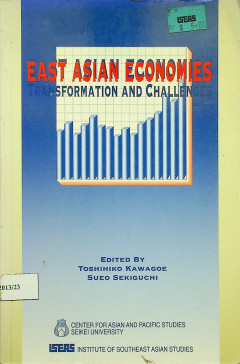
EAST ASIAN ECONOMIES TRANSFORMATION AND CHALLENGES
- Edition
- -
- ISBN/ISSN
- 981-3016-97-3
- Collation
- xiii, 421 p. : ill. ; 23 cm.
- Series Title
- -
- Call Number
- 330 Kaw e
- Edition
- -
- ISBN/ISSN
- 981-3016-97-3
- Collation
- xiii, 421 p. : ill. ; 23 cm.
- Series Title
- -
- Call Number
- 330 Kaw e

THE CHINA CRISIS: HOW CHINA`S ECONOMIC COLLAPSE WILL LEAD TO A GLOBAL DEPRESSION
- Edition
- -
- ISBN/ISSN
- 978-1-118-47077-0
- Collation
- xii, 292 p. : ill. ; 24 cm
- Series Title
- -
- Call Number
- 330.951 Gor c
- Edition
- -
- ISBN/ISSN
- 978-1-118-47077-0
- Collation
- xii, 292 p. : ill. ; 24 cm
- Series Title
- -
- Call Number
- 330.951 Gor c

MONEY, BANKING, AND THE ECONOMY, SECOND EDITION
- Edition
- 2nd
- ISBN/ISSN
- 0-393-95313-0
- Collation
- xiv, 574 p. : ill. ; 24 cm
- Series Title
- -
- Call Number
- 332.1 May m
- Edition
- 2nd
- ISBN/ISSN
- 0-393-95313-0
- Collation
- xiv, 574 p. : ill. ; 24 cm
- Series Title
- -
- Call Number
- 332.1 May m

On Competition
- Edition
- -
- ISBN/ISSN
- 0-87584-795-1
- Collation
- vi, 485 p. : ill. ; 23 cm
- Series Title
- -
- Call Number
- 382.1042 Por c
- Edition
- -
- ISBN/ISSN
- 0-87584-795-1
- Collation
- vi, 485 p. : ill. ; 23 cm
- Series Title
- -
- Call Number
- 382.1042 Por c

GOVERNMENTS AND MARKETS: TOWARD A NEW THEORY OF REGULATION
- Edition
- -
- ISBN/ISSN
- 978-0-521-28053-2
- Collation
- xvi, 559 p. : ill.; 23 cm
- Series Title
- -
- Call Number
- 381.301 Bal g
- Edition
- -
- ISBN/ISSN
- 978-0-521-28053-2
- Collation
- xvi, 559 p. : ill.; 23 cm
- Series Title
- -
- Call Number
- 381.301 Bal g
DEVELOPMENT ECONOMICS
- Edition
- -
- ISBN/ISSN
- 978-0-470-59939-6
- Collation
- xxiv, 664 p. : ill. ; 26 cm
- Series Title
- -
- Call Number
- 338.9 Sch d
- Edition
- -
- ISBN/ISSN
- 978-0-470-59939-6
- Collation
- xxiv, 664 p. : ill. ; 26 cm
- Series Title
- -
- Call Number
- 338.9 Sch d

THE DYNAMICS OF KEYNESIAN MONETARY GROWTH: MACROFOUNDATIONS
- Edition
- -
- ISBN/ISSN
- 978-0-521-18018-4
- Collation
- xxii, 409 p.; ill.; 16 x 23 cm
- Series Title
- -
- Call Number
- 339.53 Chi d
- Edition
- -
- ISBN/ISSN
- 978-0-521-18018-4
- Collation
- xxii, 409 p.; ill.; 16 x 23 cm
- Series Title
- -
- Call Number
- 339.53 Chi d
Business and Its Environment, SEVENTH EDITION
- Edition
- 7th
- ISBN/ISSN
- 978-0-13-308899-1
- Collation
- xxxiii, 747 p. : ill. ; 28 cm
- Series Title
- -
- Call Number
- 658.4 Bar b
- Edition
- 7th
- ISBN/ISSN
- 978-0-13-308899-1
- Collation
- xxxiii, 747 p. : ill. ; 28 cm
- Series Title
- -
- Call Number
- 658.4 Bar b
Monetary Theory and Fiscal Policy
- Edition
- -
- ISBN/ISSN
- -
- Collation
- ix, 236 p.; ill.; 23 cm.
- Series Title
- Economics Handbook Series
- Call Number
- 332.433 Han m
- Edition
- -
- ISBN/ISSN
- -
- Collation
- ix, 236 p.; ill.; 23 cm.
- Series Title
- Economics Handbook Series
- Call Number
- 332.433 Han m

PUBLIC CONTROL OF ECONOMIC ENTERPRISE
-
- Edition
- -
- ISBN/ISSN
- -
- Collation
- xii, 851p.;ill.;24 cm
- Series Title
- -
- Call Number
- 381.3 Koo p

INTERNATIONAL MONEY AND DEBT CHALLENGES FOR THE WORLD ECONOMY
- Edition
- -
- ISBN/ISSN
- 1-55815-084-6
- Collation
- x, 200 p. : ill.; 23 cm
- Series Title
- -
- Call Number
- 336.3 Dor i
- Edition
- -
- ISBN/ISSN
- 1-55815-084-6
- Collation
- x, 200 p. : ill.; 23 cm
- Series Title
- -
- Call Number
- 336.3 Dor i
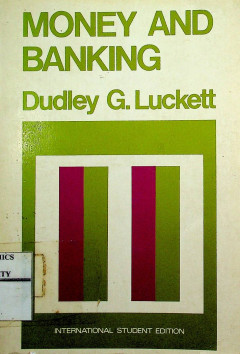
MONEY AND BANKING
- Edition
- -
- ISBN/ISSN
- 0-07-008054-3
- Collation
- xv, 583 p.; tab.; 22 cm.
- Series Title
- -
- Call Number
- 332.1 Luc m
- Edition
- -
- ISBN/ISSN
- 0-07-008054-3
- Collation
- xv, 583 p.; tab.; 22 cm.
- Series Title
- -
- Call Number
- 332.1 Luc m
Private Enterprise and Public Policy
- Edition
- -
- ISBN/ISSN
- -
- Collation
- xiv, 742 p. : ill. ; 24 cm
- Series Title
- -
- Call Number
- 658.02 Ans p
- Edition
- -
- ISBN/ISSN
- -
- Collation
- xiv, 742 p. : ill. ; 24 cm
- Series Title
- -
- Call Number
- 658.02 Ans p

TRADE REFORM: LESSONS FROM EIGHT COUNTRIES
- Edition
- -
- ISBN/ISSN
- 1-55815-086-2
- Collation
- xiv, 136 p. : ill. ; 23 cm
- Series Title
- -
- Call Number
- 382.3 She t
- Edition
- -
- ISBN/ISSN
- 1-55815-086-2
- Collation
- xiv, 136 p. : ill. ; 23 cm
- Series Title
- -
- Call Number
- 382.3 She t
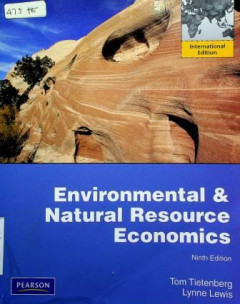
Environmental & Natural Resource Economics, Ninth Edition
- Edition
- 9th
- ISBN/ISSN
- 978-0-13-284300-3
- Collation
- xxviii, 666 p. : ill. ; 23 cm
- Series Title
- -
- Call Number
- 333.7 Tie e 2012
- Edition
- 9th
- ISBN/ISSN
- 978-0-13-284300-3
- Collation
- xxviii, 666 p. : ill. ; 23 cm
- Series Title
- -
- Call Number
- 333.7 Tie e 2012
PRICES, INCOME, AND PUBLIC POLICY
- Edition
- -
- ISBN/ISSN
- -
- Collation
- x, 500 p. : ill ; 22 cm
- Series Title
- -
- Call Number
- 338.9 All p
- Edition
- -
- ISBN/ISSN
- -
- Collation
- x, 500 p. : ill ; 22 cm
- Series Title
- -
- Call Number
- 338.9 All p
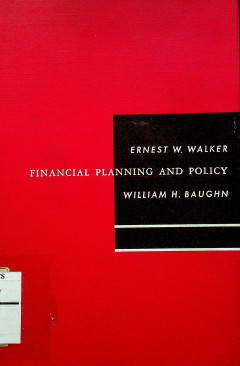
FINANCIAL PLANNING AND POLICY
- Edition
- 1
- ISBN/ISSN
- -
- Collation
- xiv, 506 p.; 23 cm.
- Series Title
- -
- Call Number
- 332.46 Wal f
- Edition
- 1
- ISBN/ISSN
- -
- Collation
- xiv, 506 p.; 23 cm.
- Series Title
- -
- Call Number
- 332.46 Wal f

ACHIEVING HEALTH FOR ALL BY THE YEARS 2000: MIDWAY REPORTS OF COUNTRY EXPERIE…
- Edition
- 1
- ISBN/ISSN
- 92-4-156132-7
- Collation
- iv, 262p.:Ill,; 24cm
- Series Title
- -
- Call Number
- 614 Ach a
- Edition
- 1
- ISBN/ISSN
- 92-4-156132-7
- Collation
- iv, 262p.:Ill,; 24cm
- Series Title
- -
- Call Number
- 614 Ach a

Decolonising Blue Spaces in the Anthropocene
This open access book crosses disciplinary boundaries to connect theories of environmental justice with Indigenous people’s experiences of freshwater management and governance. It traces the history of one freshwater crisis – the degradation of Aotearoa New Zealand’s Waipā River– to the settler-colonial acts of ecological dispossession resulting in intergenerational injustices for Indi…
- Edition
- 1
- ISBN/ISSN
- 978-3-030-61071-5
- Collation
- xxi, 494p.:ill
- Series Title
- -
- Call Number
- 333.7 Par d

The Fossil-Fuelled Climate Crisis
This book analyses the threat posed by the continued use of fossil fuels. By utilizing Elizabeth Shove’s social practices approach and Murphy’s own social closure framework, the book examines the accelerating treadmill of carbon-polluting practices. It incorporates externalities theory to investigate how the full cost of fossil fuels is paid by others rather than users, and to demonstrate t…
- Edition
- 1
- ISBN/ISSN
- 978-3-030-53325-0
- Collation
- xv, 397p.:ill
- Series Title
- -
- Call Number
- 333.7 Sum j

Just Energy Transitions and Coal Bed Methane
This book discusses how Coal Bed Methane (CBM) could help the acceleration of the energy transition in a ‘just’ way in Indonesia, due to the country's potential CBM reserves (and current dependence on climate damaging coal). Developing countries face multiple challenges in achieving their energy transitions. CBM in Indonesia could potentially be a catalyst for energy transition and subseque…
- Edition
- 1
- ISBN/ISSN
- 978-3-030-85490-4
- Collation
- xix, 239p.:ill
- Series Title
- Energy, Climate and the Environment
- Call Number
- 333.7 Sum j

China's Water Resources Management
This book investigates water resources management and policy in China over the last two decades with a core focus on the role of water for socioeconomic development and sustainability. Recent policies, such as the Three Red Lines and the Water Ten Plan are evaluated for sustainable water supply, use and quality control. The book appraises solutions through demand management, water rights and po…
- Edition
- 1
- ISBN/ISSN
- 978-3-030-78779-0
- Collation
- xix, 394p.:ill
- Series Title
- -
- Call Number
- 333.7 Lee c

Making Energy Markets
Making Energy Markets charts the emergence and early evolution of electricity markets in western Europe, covering the decade from the late 1980s to the late 1990s. Liberalising electricity marked a radical deviation from the established paradigm of state-controlled electricity systems which had become established across Europe after the Second World War. By studying early liberalisation process…
- Edition
- 1
- ISBN/ISSN
- 978-3-030-90075-5
- Collation
- xiii, 360p.:ill
- Series Title
- -
- Call Number
- 333.7 Bol m

From Polarisation to Multispecies Relationships
This book explores the concept of multi-species relationships and suggests critical systemic pathways to protect shared habitats. This book discusses how the eradication of species as a result of rapid urbanisation places humanity at risk. This book demonstrates how narrow anthropocentrism has focused on the rights of human beings at the expense of other species and the environment. This bo…
- Edition
- 1
- ISBN/ISSN
- 978-981-33-6884-2
- Collation
- xli, 777p.:ill
- Series Title
- -
- Call Number
- 339.5 Fro

Rural Livelihood and Environmental Sustainability in China
The book considers the challenge of poverty and deterioration of the ecological environment in China, particularly in rural areas. Examining key factors such as the overuse of natural resources and the loss of biodiversity in the face of an expanding population and rapidly developing economy. It focuses on examining the frameworks of rural households in poor mountainous areas in rural China, co…
- Edition
- 1
- ISBN/ISSN
- 978-981-15-6349-2
- Collation
- xxvi, 432p.:ill
- Series Title
- -
- Call Number
- 333.7 Rur

Advancing a Circular Economy
This book explores an escalating modern-day crisis; managing waste in a sustainable way. The central question posed is whether advancing a circular economy provides a way to shift waste management practices towards more sustainable approaches. It begins with an in-depth analysis of the nature of waste management and the prevailing crisis, followed by a discussion about the circular economy in t…
- Edition
- 1
- ISBN/ISSN
- 978-3-030-66564-7
- Collation
- xiii, 171p.:ill
- Series Title
- -
- Call Number
- 333.7 Jon a

Environment, Development and Sustainability in India: Perspectives, Issues an…
This book provides a comprehensive account of asymmetric linkage in the trilogy of environment, development and sustainability and its impact on society. It examines varied perspectives and issues of development related to environmental destruction and sustainability challenges. By examining the recent trends of development and recording the dilemmas which are creating ecological imbalances, it…
- Edition
- 1
- ISBN/ISSN
- 978-981-33-6248-2
- Collation
- xxx, 329p.:ill
- Series Title
- -
- Call Number
- 333.7 Env
 Computer Science, Information & General Works
 Philosophy & Psychology
 Religion
 Social Sciences
 Language
 Pure Science
 Applied Sciences
 Art & Recreation
 Literature
 History & Geography