Filter by
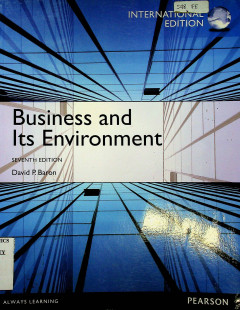
Business and Its Environment, SEVENTH EDITION
- Edition
- 7th
- ISBN/ISSN
- 978-0-13-308899-1
- Collation
- xxxiii, 747 p. : ill. ; 28 cm
- Series Title
- -
- Call Number
- 658.4 Bar b
- Edition
- 7th
- ISBN/ISSN
- 978-0-13-308899-1
- Collation
- xxxiii, 747 p. : ill. ; 28 cm
- Series Title
- -
- Call Number
- 658.4 Bar b

Monetary Theory and Fiscal Policy
- Edition
- -
- ISBN/ISSN
- -
- Collation
- ix, 236 p.; ill.; 23 cm.
- Series Title
- Economics Handbook Series
- Call Number
- 332.433 Han m
- Edition
- -
- ISBN/ISSN
- -
- Collation
- ix, 236 p.; ill.; 23 cm.
- Series Title
- Economics Handbook Series
- Call Number
- 332.433 Han m

PUBLIC CONTROL OF ECONOMIC ENTERPRISE
-
- Edition
- -
- ISBN/ISSN
- -
- Collation
- xii, 851p.;ill.;24 cm
- Series Title
- -
- Call Number
- 381.3 Koo p

INTERNATIONAL MONEY AND DEBT CHALLENGES FOR THE WORLD ECONOMY
- Edition
- -
- ISBN/ISSN
- 1-55815-084-6
- Collation
- x, 200 p. : ill.; 23 cm
- Series Title
- -
- Call Number
- 336.3 Dor i
- Edition
- -
- ISBN/ISSN
- 1-55815-084-6
- Collation
- x, 200 p. : ill.; 23 cm
- Series Title
- -
- Call Number
- 336.3 Dor i
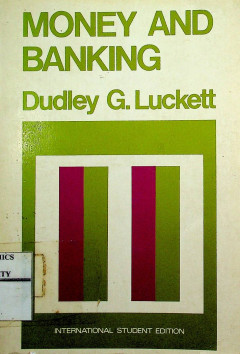
MONEY AND BANKING
- Edition
- -
- ISBN/ISSN
- 0-07-008054-3
- Collation
- xv, 583 p.; tab.; 22 cm.
- Series Title
- -
- Call Number
- 332.1 Luc m
- Edition
- -
- ISBN/ISSN
- 0-07-008054-3
- Collation
- xv, 583 p.; tab.; 22 cm.
- Series Title
- -
- Call Number
- 332.1 Luc m

Private Enterprise and Public Policy
- Edition
- -
- ISBN/ISSN
- -
- Collation
- xiv, 742 p. : ill. ; 24 cm
- Series Title
- -
- Call Number
- 658.02 Ans p
- Edition
- -
- ISBN/ISSN
- -
- Collation
- xiv, 742 p. : ill. ; 24 cm
- Series Title
- -
- Call Number
- 658.02 Ans p

TRADE REFORM: LESSONS FROM EIGHT COUNTRIES
- Edition
- -
- ISBN/ISSN
- 1-55815-086-2
- Collation
- xiv, 136 p. : ill. ; 23 cm
- Series Title
- -
- Call Number
- 382.3 She t
- Edition
- -
- ISBN/ISSN
- 1-55815-086-2
- Collation
- xiv, 136 p. : ill. ; 23 cm
- Series Title
- -
- Call Number
- 382.3 She t
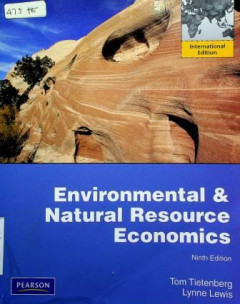
Environmental & Natural Resource Economics, Ninth Edition
- Edition
- 9th
- ISBN/ISSN
- 978-0-13-284300-3
- Collation
- xxviii, 666 p. : ill. ; 23 cm
- Series Title
- -
- Call Number
- 333.7 Tie e 2012
- Edition
- 9th
- ISBN/ISSN
- 978-0-13-284300-3
- Collation
- xxviii, 666 p. : ill. ; 23 cm
- Series Title
- -
- Call Number
- 333.7 Tie e 2012
PRICES, INCOME, AND PUBLIC POLICY
- Edition
- -
- ISBN/ISSN
- -
- Collation
- x, 500 p. : ill ; 22 cm
- Series Title
- -
- Call Number
- 338.9 All p
- Edition
- -
- ISBN/ISSN
- -
- Collation
- x, 500 p. : ill ; 22 cm
- Series Title
- -
- Call Number
- 338.9 All p
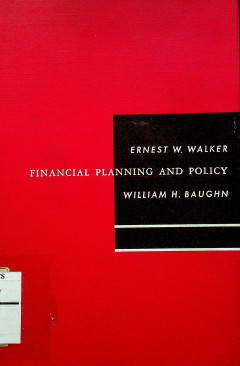
FINANCIAL PLANNING AND POLICY
- Edition
- 1
- ISBN/ISSN
- -
- Collation
- xiv, 506 p.; 23 cm.
- Series Title
- -
- Call Number
- 332.46 Wal f
- Edition
- 1
- ISBN/ISSN
- -
- Collation
- xiv, 506 p.; 23 cm.
- Series Title
- -
- Call Number
- 332.46 Wal f

ACHIEVING HEALTH FOR ALL BY THE YEARS 2000: MIDWAY REPORTS OF COUNTRY EXPERIE…
- Edition
- 1
- ISBN/ISSN
- 92-4-156132-7
- Collation
- iv, 262p.:Ill,; 24cm
- Series Title
- -
- Call Number
- 614 Ach a
- Edition
- 1
- ISBN/ISSN
- 92-4-156132-7
- Collation
- iv, 262p.:Ill,; 24cm
- Series Title
- -
- Call Number
- 614 Ach a

Decolonising Blue Spaces in the Anthropocene
This open access book crosses disciplinary boundaries to connect theories of environmental justice with Indigenous people’s experiences of freshwater management and governance. It traces the history of one freshwater crisis – the degradation of Aotearoa New Zealand’s Waipā River– to the settler-colonial acts of ecological dispossession resulting in intergenerational injustices for Indi…
- Edition
- 1
- ISBN/ISSN
- 978-3-030-61071-5
- Collation
- xxi, 494p.:ill
- Series Title
- -
- Call Number
- 333.7 Par d

The Fossil-Fuelled Climate Crisis
This book analyses the threat posed by the continued use of fossil fuels. By utilizing Elizabeth Shove’s social practices approach and Murphy’s own social closure framework, the book examines the accelerating treadmill of carbon-polluting practices. It incorporates externalities theory to investigate how the full cost of fossil fuels is paid by others rather than users, and to demonstrate t…
- Edition
- 1
- ISBN/ISSN
- 978-3-030-53325-0
- Collation
- xv, 397p.:ill
- Series Title
- -
- Call Number
- 333.7 Sum j

Just Energy Transitions and Coal Bed Methane
This book discusses how Coal Bed Methane (CBM) could help the acceleration of the energy transition in a ‘just’ way in Indonesia, due to the country's potential CBM reserves (and current dependence on climate damaging coal). Developing countries face multiple challenges in achieving their energy transitions. CBM in Indonesia could potentially be a catalyst for energy transition and subseque…
- Edition
- 1
- ISBN/ISSN
- 978-3-030-85490-4
- Collation
- xix, 239p.:ill
- Series Title
- Energy, Climate and the Environment
- Call Number
- 333.7 Sum j

China's Water Resources Management
This book investigates water resources management and policy in China over the last two decades with a core focus on the role of water for socioeconomic development and sustainability. Recent policies, such as the Three Red Lines and the Water Ten Plan are evaluated for sustainable water supply, use and quality control. The book appraises solutions through demand management, water rights and po…
- Edition
- 1
- ISBN/ISSN
- 978-3-030-78779-0
- Collation
- xix, 394p.:ill
- Series Title
- -
- Call Number
- 333.7 Lee c

Making Energy Markets
Making Energy Markets charts the emergence and early evolution of electricity markets in western Europe, covering the decade from the late 1980s to the late 1990s. Liberalising electricity marked a radical deviation from the established paradigm of state-controlled electricity systems which had become established across Europe after the Second World War. By studying early liberalisation process…
- Edition
- 1
- ISBN/ISSN
- 978-3-030-90075-5
- Collation
- xiii, 360p.:ill
- Series Title
- -
- Call Number
- 333.7 Bol m

From Polarisation to Multispecies Relationships
This book explores the concept of multi-species relationships and suggests critical systemic pathways to protect shared habitats. This book discusses how the eradication of species as a result of rapid urbanisation places humanity at risk. This book demonstrates how narrow anthropocentrism has focused on the rights of human beings at the expense of other species and the environment. This bo…
- Edition
- 1
- ISBN/ISSN
- 978-981-33-6884-2
- Collation
- xli, 777p.:ill
- Series Title
- -
- Call Number
- 339.5 Fro

Rural Livelihood and Environmental Sustainability in China
The book considers the challenge of poverty and deterioration of the ecological environment in China, particularly in rural areas. Examining key factors such as the overuse of natural resources and the loss of biodiversity in the face of an expanding population and rapidly developing economy. It focuses on examining the frameworks of rural households in poor mountainous areas in rural China, co…
- Edition
- 1
- ISBN/ISSN
- 978-981-15-6349-2
- Collation
- xxvi, 432p.:ill
- Series Title
- -
- Call Number
- 333.7 Rur

Advancing a Circular Economy
This book explores an escalating modern-day crisis; managing waste in a sustainable way. The central question posed is whether advancing a circular economy provides a way to shift waste management practices towards more sustainable approaches. It begins with an in-depth analysis of the nature of waste management and the prevailing crisis, followed by a discussion about the circular economy in t…
- Edition
- 1
- ISBN/ISSN
- 978-3-030-66564-7
- Collation
- xiii, 171p.:ill
- Series Title
- -
- Call Number
- 333.7 Jon a

Environment, Development and Sustainability in India: Perspectives, Issues an…
This book provides a comprehensive account of asymmetric linkage in the trilogy of environment, development and sustainability and its impact on society. It examines varied perspectives and issues of development related to environmental destruction and sustainability challenges. By examining the recent trends of development and recording the dilemmas which are creating ecological imbalances, it…
- Edition
- 1
- ISBN/ISSN
- 978-981-33-6248-2
- Collation
- xxx, 329p.:ill
- Series Title
- -
- Call Number
- 333.7 Env

East Africa’s Human Environment Interactions
This book is an ambitious integration of ecological, archaeological, anthropological land use sciences, drawing on human geography, demography and economics of development across the East Africa region. It focuses on understanding and unpicking the interactions that have taken place between the natural and unnatural history of the East African region and trace this interaction from the evolutio…
- Edition
- 1
- ISBN/ISSN
- 978-3-030-88987-6
- Collation
- xxxii, 411p.:ill
- Series Title
- -
- Call Number
- 333.7 Mar e

One Hundred Years of Social Protection
While the rise of social protection in the global North has been widely researched, we know little about the history of social protection in the global South. This volume investigates the experiences of four middle-income countries - Brazil, India, China and South Africa - from 1920 to 2020, analysing if, when, and how these countries articulated a concern about social issues and social cohesio…
- Edition
- 1
- ISBN/ISSN
- 978-3-030-54959-6
- Collation
- xxiv, 437p.:ill
- Series Title
- -
- Call Number
- 320.6 One

Researching People and the Sea
In this unique edited collection, social scientists reflect upon and openly share insights gathered from researching people and the sea. Understanding how people use, relate to and interact with coastal and marine environments has never been more important, with social scientists having an increasingly vital contribution to make. Yet practical experiences in deploying social science approaches …
- Edition
- 1
- ISBN/ISSN
- 978-3-030-59601-9
- Collation
- xxiii, 352p.:ill
- Series Title
- -
- Call Number
- 333.7 Res

Pilot Society and the Energy Transition
This open access book examines the role of pilot and demonstration projects as crucial devices for conducting innovation in the context of the energy transition. Bridging literature from sustainability transitions and Science and Technology Studies (STS), it argues that such projects play a crucial role, not only in shaping future energy and mobility systems, but in transforming societies more …
- Edition
- 1
- ISBN/ISSN
- 978-3-030-61184-2
- Collation
- vii, 130p.:ill
- Series Title
- -
- Call Number
- 333.7 Ryg p

Future-Proofing Fuel Cells
As the world accelerates towards a renewable energy transition, the demand for critical raw materials (CRMs) for energy generation, conversion, and storage technologies is seeing a drastic increase. Such materials are not only subject to limited supply and extreme price volatility but can also represent serious burdens to the environment, to human health, and also to socio-political systems. Ta…
- Edition
- 1
- ISBN/ISSN
- 978-3-030-76806-5
- Collation
- xv, 135p.:ill
- Series Title
- -
- Call Number
- 333.7 Daf f

Practical Sustainability
This book will teach you everything you need to know about sustainable living—from reducing your greenhouse gas footprint to making sure that you are part of the green economy. Along the way, readers will learn about the field of sustainability and the “three E’s” of sustainable living—environment, economy, and equity. We are in the midst of great environmental change and all of us ne…
- Edition
- 1
- ISBN/ISSN
- 978-3-030-73782-5
- Collation
- xiv, 302p.:ill
- Series Title
- -
- Call Number
- 333.7 Bri p

Political Ecology
This textbook introduces political ecology as an interdisciplinary approach to critically examine land and environmental issues. Drawing on discourse and narrative analysis, Marxist political economy and insights from natural science, the book points at similarities, differences and inter-connections between environmental governance in the global North and South. A wide range of carefully…
- Edition
- 1
- ISBN/ISSN
- 978-3-030-56036-2
- Collation
- xviii, 249p.:ill
- Series Title
- -
- Call Number
- 333.7 Ben p

Water Asset Management in Times of Climate Change and Digital Transformation
In this book, climate change and digital transformation are explored as key strategic drivers for the contemporary practices of water utility companies. These drivers seem to be separate, but clearly, they are not. The recent weather anomalies in water stressed countries are discussed, which have been breaking records and become an elevated risk to water assets. In parallel, the book examine…
- Edition
- 1
- ISBN/ISSN
- 978-3-030-79360-9
- Collation
- xvii, 173p.:ill
- Series Title
- -
- Call Number
- 333.7 Kij w

ENVIRONMENTAL POLICY AND PUBLIC HEALTH : Pollution, Global Climate Change, an…
- Edition
- 1
- ISBN/ISSN
- 978-0-470-59343-1
- Collation
- xxvi, 420 p.; ill.; 24cm
- Series Title
- -
- Call Number
- 362.196 98 Rom e
- Edition
- 1
- ISBN/ISSN
- 978-0-470-59343-1
- Collation
- xxvi, 420 p.; ill.; 24cm
- Series Title
- -
- Call Number
- 362.196 98 Rom e

Unearthing Politics
This book examines an important socio-political challenge to the ruling party regime in Vietnam. Vietnam has been the subject of substantial controversy and challenge to the Vietnamese party regime since market reform in the 1980s, especially since the controversy over bauxite mining in the late 2000. Using the environmental dimensions of this problem to highlight a confluence of trends disrupt…
- Edition
- 1
- ISBN/ISSN
- 978-981-16-3124-5
- Collation
- xiii, 241p.:ill
- Series Title
- -
- Call Number
- 333.7 Mor u
 Computer Science, Information & General Works
 Philosophy & Psychology
 Religion
 Social Sciences
 Language
 Pure Science
 Applied Sciences
 Art & Recreation
 Literature
 History & Geography