Filter by

AKAD PEMBIAYAAN BERBASIS TEKNOLOGI INFORMASI BERDASARKAN PRINSIP SYARIAH BAGI…
ABSTRAK Pabrik Akrolein direncanakan berlokasi di daerah Bekasi, Jawa Barat. Seluas 4,5 ha dengan kapasitas 60.000 ton/tahun. Proses pembuatan Akrolein ini menggunakan bahan baku Gliserol dengan Tungstic Zirconia sebagai katalis. Reaksi berlangsung pada tekanan 2,9 atm dan temperatur 310oC (US 2017/0088500 A1). Reaktor yang digunakan adalah Multitubular Fixed Bed Reactor. Dengan reaksi yang ter…
- Edition
- -
- ISBN/ISSN
- -
- Collation
- xvi, 84 hlm.; ilus.; 29 cm
- Series Title
- -
- Call Number
- T1541022024

PRA RANCANGAN PABRIK PEMBUATAN KALSIUM FLUORIDA KAPASITAS 46.000 TON/TAHUN
A calcium fluoride manufacturing plant with a production capacity of 46.000 tons/year is planned to be established in 2029 on Sukomulyo Highway, Roomo Village, Manyar District, Gresik Regency, East Java Province.The area of the plant is estimated at 6 Ha. Calcium fluoride is produced using fluorosilicic acid (H2SiF6), ammonium hydroxide (NH4OH), and calcium carbonate (CaCO3) as raw materials in…
- Edition
- -
- ISBN/ISSN
- -
- Collation
- xxvii, 512 hlm.; ilus.; tab, 29 cm
- Series Title
- -
- Call Number
- T1886652025

PRA RANCANGAN PABRIK PEMBUATAN TETRAHIDROFURAN KAPASITAS 57.000 TON PER TAHUN
Pabrik pembuatan Tetrahidrofuran dengan kapasitas 57.000 ton/tahun direncanakan pembangunannya pada tahun 2030 yang berlokasi di Jalan Amerika, Kelurahan Warnasari, Kecamatan Citangkil, Kota Cilegon, Provinsi Banten dengan luas area pabrik sebesar 3,1 ha. Pabrik beroperasi selama 24 jam/hari dalam 330 hari/tahun. Proses produksi Tetrahidrofuran mengacu pada patent No.CN221230543U melalui proses…
- Edition
- -
- ISBN/ISSN
- -
- Collation
- xxvi, 540 hlm.; ilus.; tab, 29 cm
- Series Title
- -
- Call Number
- T1886442025

MODIFIKASI ALUMINA SILIKA DENGAN TEMPLATE KHFTALAT SEBAGAI PENGEMBAN LOGAM Ni…
The research was conducted on the modification of alumina silica using a KHPthalate template as a carrier of Ni-Mo metal for hydrocracking catalysts for crude palm oil (CPO) into biogasoline and bioavtur. The concentration variations used were 5% and 25% with the addition based on the ratio of alumina nitrate in the catalyst synthesis. The hydrocracking process was carried out at 350°C for 2 h…
- Edition
- -
- ISBN/ISSN
- -
- Collation
- xviii, 102 hlm.; ilus.; tab, 29 cm
- Series Title
- -
- Call Number
- T1886622025

PRA RANCANGAN PABRIK PEMBUATAN AKROLEIN KAPASITAS 60.000 TON/TAHUN
Pabrik pembuatan akrolein dengan kapasitas produksi 60.000 ton/tahun direncanakan untuk beroperasi pada tahun 2030 di Manyarejo, Kecamatan Manyar, Kabupaten Gresik, Provinsi Jawa Timur yang diperkirakan memiliki luas area seluas 2,72 Ha. Proses pembuatan senyawa ini mengacu kepada paten dengan nomor CN118125905A. Bahan baku yang digunakan yaitu gliserol dengan tambahan air dan adiponitril sebag…
- Edition
- -
- ISBN/ISSN
- -
- Collation
- xxiv, 317 hlm.; ilus.; tab, 29 cm
- Series Title
- -
- Call Number
- T1888172025

INKORPORASI PATI KULIT PISANG KEPOK DALAM PEMBUATAN EDIBLE FILM TEPUNG SAGU U…
Edible film is a thin layer used as packaging that can be consumed together with food products. This study aims to create an edible film made from sago flour incorporated with kepok banana peel starch to increase the viability of Lactobacillus plantarum bacteria. The resulting edible film was analyzed for its physical and mechanical properties, then analyzed for resistant starch and bacterial v…
- Edition
- -
- ISBN/ISSN
- -
- Collation
- xviii, 97 hlm.; ilus.; tab, 29 cm
- Series Title
- -
- Call Number
- T1886132025

SINTESIS KOMPOSIT KITOSAN/GRAPHENE OXIDE-Fe2O3 DENGAN METODE KOPRESIPITASI UN…
The research about synthesis of chitosan/graphene oxide-Fe2O3 composite using the coprecipitation method for adsorption of methylene blue dye. This research was conducted to determine the ability of the chitosan/GO-Fe2O3 composite in adsorbing methylene blue dye. This composite were characterized using XRD, SEM-EDS, BET and applied in adsorbing methylene blue. The methylene blue adsorption proc…
- Edition
- -
- ISBN/ISSN
- -
- Collation
- xvii, 128 hlm.; ilus.; 29 cm
- Series Title
- -
- Call Number
- T1520382024

PRA RANCANGAN PABRIK PEMBUATAN FORMALDEHIDA KAPASITAS 150.000 TON/TAHUN
Pabrik pembuatan formaldehida kapasitas produksi 150.000 ton/tahun direncanakan pembangunannya pada tahun 2035 yang berlokasi di Bontang, Kalimantan Timur seluas 3 Ha. Operasi pabrik berjalan selama 24 jam/hari dalam 330 hari/tahun. Komoditi Formaldehida yang diproduksi mengacu pada US Patent US/2023/0271910 A1 yang menggunakan proses Catalytic Oxidative Dehydrogenation of Methanol dengan katal…
- Edition
- -
- ISBN/ISSN
- -
- Collation
- xix, 323 hlm.; ilus.; tab, 29 cm
- Series Title
- -
- Call Number
- T1886532025

PRA RANCANGAN PABRIK PEMBUATAN BUTIL AKRILAT KAPASITAS 88.000 TON PER TAHUN
Pabrik pembuatan butil akrilat dengan kapasitas produksi 88.000 ton/tahun direncanakan berdiri pada tahun 2031 di Jalan Samangraya, Kecamatan Citangkil, Kota Cilegon, Provinsi Banten dengan luas 11,58 Ha. Butil akrilat yang diproduksi menggunakan bahan baku asam akrilat yang diesterifikasi dengan butanol menggunakan bantuan katalis asam asetat dalam continuous stirred tank reactor berdasarkan p…
- Edition
- -
- ISBN/ISSN
- -
- Collation
- xxii, 528 hlm.; ilus.; tab, 29 cm
- Series Title
- -
- Call Number
- T1886522025

ANALISIS KUALITAS KIMIA AIR MINUM KEMASAN DAN RISIKO KESEHATAN
Background: Packaged drinking water (AMDK) is widely consumed due to its convenience and perceived hygiene; however, its chemical quality does not always meet established standards. Components such as pH and heavy metals exceeding permissible limits can pose health risks. Therefore, an analysis of AMDK chemical quality based on the Environmental Quality Standard (SBMKL) PMK No. 2 of 2023 is nec…
- Edition
- -
- ISBN/ISSN
- -
- Collation
- xv, 96 hlm.; ilus.; tab, 29 cm
- Series Title
- -
- Call Number
- T1886032025

PENGARUH PERSENTASE BERAT KATALIS NI/C DAN TEMPERATUR PADA HYDROCRACKING PROD…
This study aims to determine the best operating conditions based on the effect of Ni/C catalyst weight percentage and temperature on hydrocracking of lignite coal pyrolysis products. The hydrocracking process was carried out using variations in catalyst weight percentage of 5, 10, 15, dan 20% also using temperature variations of 400, 450, 500, 550, and 600°C. Catalyst characterization was cond…
- Edition
- -
- ISBN/ISSN
- -
- Collation
- xiii, 49 hlm.; ilus.; 29 cm
- Series Title
- -
- Call Number
- T1520162024

PENGARUH TEMPERATUR PIROLISIS BATUBARA LIGNIT TERHADAP BERAT JENIS DAN KARAKT…
In this research, lignite coal is used as raw material for making coal oil. The method used is the pyrolysis method using temperature variations of 450-600°C. The coal oil resulting from pyrolysis was analyzed using GC-MS, %yield, specific gravity, and heating value. The optimal temperature obtained in the lignite coal pyrolysis process is 500°C. The results of GC-MS analysis showed that the …
- Edition
- -
- ISBN/ISSN
- -
- Collation
- xv, 130 hlm.; ilus.; 29 cm
- Series Title
- -
- Call Number
- T1519952024

ANALISA SEBARAN LOGAM BERAT BESI (Fe) SERTA STATUS MUTU PERAIRAN PADA SUNGAI …
The research on the distribution of heavy metal iron (Fe) in Gasing River water has been conducted. This research aims to determine the distribution of heavy metal iron (Fe) pollution in Gasing River and the quality status of Gasing River water. This research began with sampling at seven points, including the upstream of Gasing River, Kenten Village Bridge, Gasing Tengah Bridge, Middle of Gasin…
- Edition
- -
- ISBN/ISSN
- -
- Collation
- xvii, 128 hlm.; ilus.; 29 cm
- Series Title
- -
- Call Number
- T1520612024

PENGARUH TEMPERATUR PIROLISIS TERHADAP KUALITAS KARBON AKTIF DARI BATUBARA LI…
This study aims to determine the effect of temperature on the quality of activated carbon from lignite coal through the pyrolysis process. Activated carbon is made at a temperature increase rate of 0.5 dergress celcius per second . This test was carried out using temperature variations of 450, 500, 550, and 600 dergress celcius. Activated carbon was tested for quality by measuring water content…
- Edition
- -
- ISBN/ISSN
- -
- Collation
- xiv, 76 hlm.; ilus.; 29 cm
- Series Title
- -
- Call Number
- T1520422024

SINTESIS KOMPOSIT MnFe2O4/KARBON AKTIF@ZnO UNTUK ADSORPSI DAN DEGRADASI ZAT W…
Research on the synthesis of MnFe2O4/Activated Carbon@ZnO for adsorption and degradation of Congo red dye. Coal-based activated carbon is chemically activated. Synthesis MnFe2O4/Active Carbon and MnFe2O4/Active Carbon@ZnO were synthesized using the coprecipitation method. The composite is a powder that is faded brown in color and is magnetic. The results of the synthesis of MnFe2O4/Activated Ca…
- Edition
- -
- ISBN/ISSN
- -
- Collation
- xiv, 100 hlm.; ilus.; 29 cm
- Series Title
- -
- Call Number
- T1520312024

SINTESIS KOMPOSIT NiFe2O4/KARBON AKTIF@ZnO UNTUK ADSORPSI DAN DEGRADASI ZAT W…
This research aims to synthesize NiFe2O4/activated carbon@ZnO composite used in the adsorption and degradation process of Congo red dye. The synthesized product was characterized using XRD, VSM and UV-Vis DRS instruments against Congo red dye in various pH, dye concentration, and contact time. The synthesis of the NiFe2O4/activated carbon@ZnO composite was carried out using precipitation method…
- Edition
- -
- ISBN/ISSN
- -
- Collation
- xiv, 105 hlm.; ilus.; 29 cm
- Series Title
- -
- Call Number
- T1520022024

SINTESIS KOMPOSIT Fe3O4/KARBON AKTIF@NiO UNTUK ADSORPSI DAN DEGRADASI ZAT WAR…
This research aims to synthesize Fe3O4/activated carbon@NiO composite used in the adsorption and degradation process of Congo red dye. Nanomagnetic Fe3O4 utilized to reduce the band gap value of NiO as well to impart magnetic properties. Activated carbon from bamboo is utilized as an adsorbent in the adsorption process and NiO as a photocatalyst in the degradation process. The Fe3O4/activated c…
- Edition
- -
- ISBN/ISSN
- -
- Collation
- xi, 78 hlm.; ilus.; 29 cm
- Series Title
- -
- Call Number
- T1519982024

PENERAPAN SONIKASI PADA ADSORPSI RHODAMIN B MENGGUNAKAN KARBON AKTIF CANGKANG…
This research uses palm oil shells as raw material for making active carbon. Activated carbon was activated using 10% H3PO4 and modified using Co(OH)2. The obtained pHPZC value is at pH 7, so the adsorption in this study was conducted at pH 8. In this research, adsorption was determined from adsorption kinetics and adsorption isotherms. Based on the results of XRD, FTIR electron microscope and …
- Edition
- -
- ISBN/ISSN
- -
- Collation
- xv, 130 hlm.; ilus.; 29 cm
- Series Title
- -
- Call Number
- T1519252024

SINTESIS KOMPOSIT FE3O4/KARBON AKTIF DARI BAMBU@ZNO UNTUK ADSORPSI DAN DEGRAD…
The rapid development of the textile industry has resulted in an increase in liquid dye waste produced. Congo red dye is widely used in textile production. Congo red has toxic properties so it will cause various diseases if it enters the human body in large quantities. Therefore, it is necessary to process dye liquid waste. In this research, the synthesis of Fe3O4/Activated Carbon@ZnO composite…
- Edition
- -
- ISBN/ISSN
- -
- Collation
- xvii, 128 hlm.; ilus.; 29 cm
- Series Title
- -
- Call Number
- T1519312024

UJI KINERJA MEMBRANE ELECTRODE ASSEMBLY (MEA) MENGGUNAKAN KATALIS Pt-BLACK DA…
Performance testing of the membrane electrode assembly (MEA) using Pt-Black and Pt/C catalysts for direct methanol fuel cell (DMFC) on electrolyte membranes with varying methanol concentrations has been carried out. MEA is designed by combining Pt-Black electrodes on the anode side and Pt/C on the cathode side using Nafion 117 (N117) and Nafion 212 (N212) membranes. MEA was characterized using …
- Edition
- -
- ISBN/ISSN
- -
- Collation
- xiv, 76 hlm.; ilus.; 29 cm
- Series Title
- -
- Call Number
- T1519292024

SINTESIS KOMPOSIT (BENTONIT-TIO2)-GO UNTUK PENYERAPAN ZAT WARNA METILEN BIRU
This research generates the synthesis of (bentonite-TiO2)-GO composites for the distribution of methylene blue dye. A dye that is often used for textile coloring purposes with various chemical properties, one of which is methylene blue. The dyes that are thrown away will end up as waste. This has the potential to harm human health and threaten aquatic ecosystems. The adsorption method is one th…
- Edition
- -
- ISBN/ISSN
- -
- Collation
- xiv, 100 hlm.; ilus.; 29 cm
- Series Title
- -
- Call Number
- T1519162024

ANALISIS PENCEMARAN LOGAM BERAT TEMBAGA DALAM SEDIMEN DI SUNGAI GASING BERDAS…
Heavy metal copper (Cu) in the sediment of Gasing River, Banyuasin, South Sumatra has been studied. The research aims to determine the distribution of copper (Cu) metal and determine the level of copper (Cu) metal pollution in sediments based on the geoaccumulation index. The research began with sediment sampling at six locations in the upstream to downstream of the Gasing River. Sediment sampl…
- Edition
- -
- ISBN/ISSN
- -
- Collation
- ix, 74 hlm.; ilus.; 29 cm
- Series Title
- -
- Call Number
- T1517162024

UJI KINERJA BATERAI ION NATRIUM BERBASIS ANODA TiO2 DAN KATODA NaNiPO4 DENGAN…
This research focuses on testing the performance of sodium-ion batteries using variations in NaNO₃ electrolyte concentrations (1M and 4M) and solvent types (H₂O and DMSO), with the aim of determining the most effective combination. The objective of this study is to analyze the electrochemical characterization of TiO₂/NaNiPO₄ electrodes and to assess the influence of solvent and electrol…
- Edition
- -
- ISBN/ISSN
- -
- Collation
- xvii, 38 hlm.; ilus,; tab, 29 cm
- Series Title
- -
- Call Number
- T1837102025

UJI KINERJA BATERAI ION NATRIUM MENGGUNAKAN SNO2 DAN NAFEPO4 DENGAN VARIASI P…
This research uses SnO₂ powder as the anode and NaFePO₄ powder was synthesized using the sol-gel method as the cathode, combined with binchotan carbon, PANi, and DMSO solvent, stirred until forming a paste, which was then coated and dried to form a thin sheet. NaNO₃ salt was used as the electrolyte with varying concentrations, while DMSO and H₂O. The results of characterization using SE…
- Edition
- -
- ISBN/ISSN
- -
- Collation
- xvii, 63 hlm.; ilus,; tab, 29 cm
- Series Title
- -
- Call Number
- T1837082025

APLIKASI METODE POTENSIOMETRI SEL KONSENTRASI UNTUK ANALISIS ION SENG (II) DA…
Zinc ion analysis in Sekanak River has been conducted using concentration cell potentiometric method. This method is proven valid because it has a correlation coefficient of 0.9980 linear area in the concentration range of 1x10⁻⁵ to 3x10⁻² mol/L. The resulting precision was 0.9% with an average recovery value of 93.44%. In addition, the limit of detection (LoD) of the method was 1.03x10⁻⁶ mol/L…
- Edition
- -
- ISBN/ISSN
- -
- Collation
- xv, 42 hlm.; ilus.; 29 cm
- Series Title
- -
- Call Number
- T1597662024

APLIKASI METODE POTENSIOMETRI SEL KONSENTRASI UNTUK ANALISIS LOGAM TIMBAL (PB…
Validation of the potentiometric cell concentration method and analysis of lead metal in Sekanak river sediments has been carried out. The aims research to validate the concentration cell potentiometric method in determining lead metal (Pb) in sediments and determine the distribution of lead metal (Pb) in Sekanak river sediments. The concentration cell potentiometric method was proven to be val…
- Edition
- -
- ISBN/ISSN
- -
- Collation
- xiii, 49 hlm.; ilus.; 29 cm
- Series Title
- -
- Call Number
- T1515352024

APLIKASI KATALIS BERBASIS K2CO3 DARI TANDAN KOSONG KELAPA SAWIT UNTUK PRODUKS…
The application of K2CO3-based catalysts from oil palm empty fruit bunches (EFB) aims to utilize and process biomass waste. TKKS contains K2CO3 which is needed as a raw material for catalyst production. K2CO3 in TKKS is obtained by solid-liquid extraction (leaching) method. The potassium content in the TKKS ash and solids resulting from the extraction was evaluated using XRF (X-Ray Fluorescence…
- Edition
- -
- ISBN/ISSN
- -
- Collation
- xiii, 83 hlm.; ilus.; 29 cm
- Series Title
- -
- Call Number
- T51513312024

SIFAT FISIKOKIMIA CUKO DARI BEBERAPA RESTORAN PEMPEK DI KOTA PALEMBANG SELAMA…
This study aimed to determine the physicochemical properties of cuko from several pempek restaurants in Palembang City during storage. This study used a Completely Randomized Design (CRD) Factorial with two treatment factors, repeated three times and used quantitative descriptive method. Factor A was the type of cuko from several pempek restaurants in Palembang City (cuko restaurant A, cuko res…
- Edition
- -
- ISBN/ISSN
- -
- Collation
- xii, 216 hlm.; ilus.; 29 cm
- Series Title
- -
- Call Number
- T1510332024

Kimia Dasar II
- Edition
- -
- ISBN/ISSN
- 978-623-266-915-4
- Collation
- x, 299 hlm.; ilus.; 23 cm.
- Series Title
- -
- Call Number
- 540 Ach k
- Edition
- -
- ISBN/ISSN
- 978-623-266-915-4
- Collation
- x, 299 hlm.; ilus.; 23 cm.
- Series Title
- -
- Call Number
- 540 Ach k
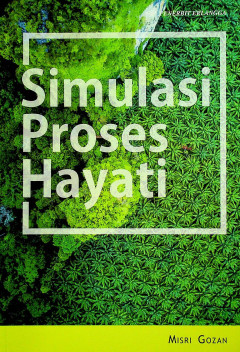
Simulasi Proses Hayati
- Edition
- -
- ISBN/ISSN
- 978-602-486-119-3
- Collation
- xvi, 192 hlm, ; ill, ; 20 cm
- Series Title
- -
- Call Number
- 660.28 Goz s
- Edition
- -
- ISBN/ISSN
- 978-602-486-119-3
- Collation
- xvi, 192 hlm, ; ill, ; 20 cm
- Series Title
- -
- Call Number
- 660.28 Goz s
 Computer Science, Information & General Works
  Philosophy & Psychology
  Religion
  Social Sciences
  Language
  Pure Science
  Applied Sciences
  Art & Recreation
  Literature
  History & Geography